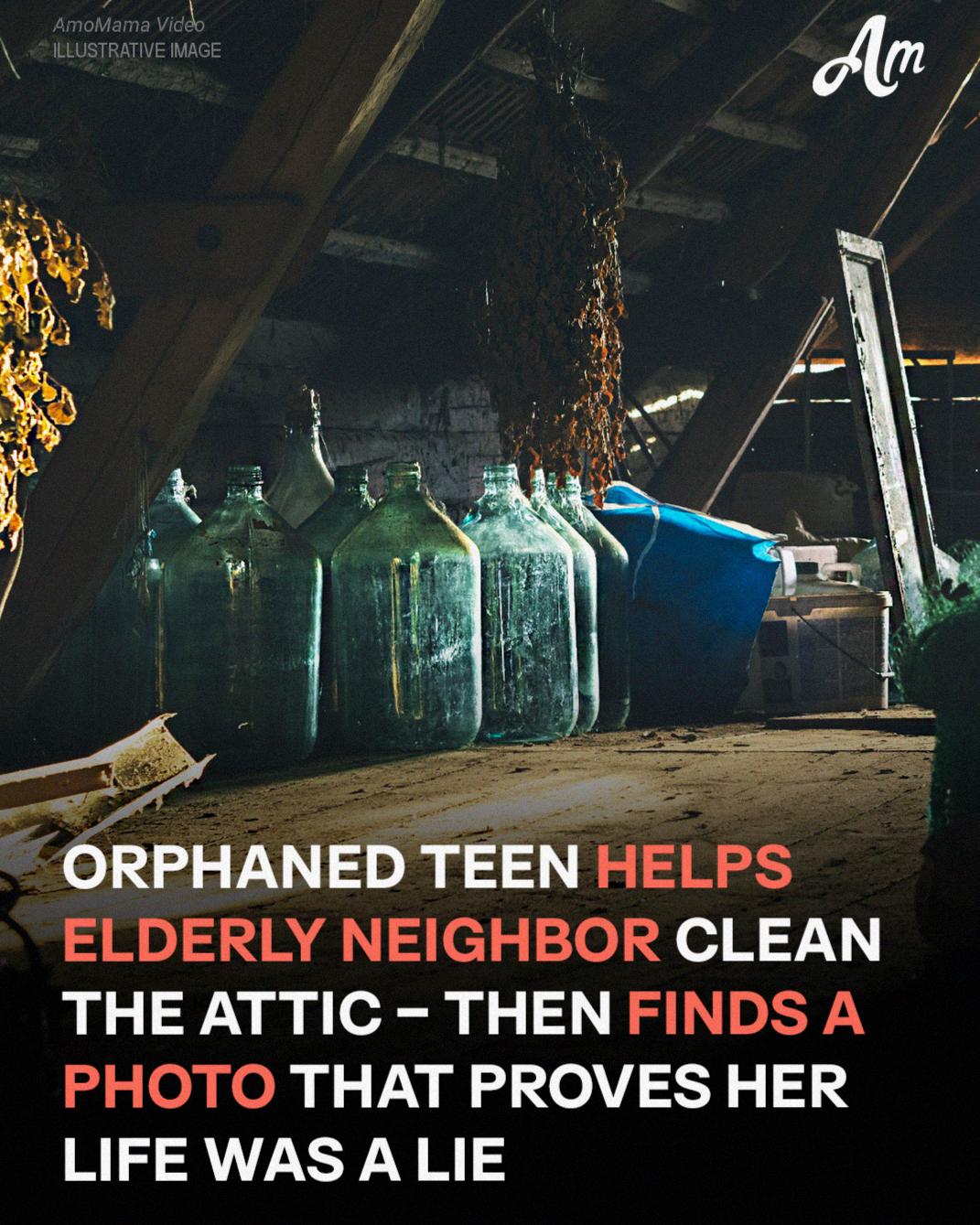
Maya had spent her life drifting through foster homes, holding on only to a silver sun-shaped pendant left by the parents she believed had died long ago. When she offered to help her elderly neighbor, Mrs. Harris, clean out a long-sealed attic, she expected nothing more than dust and quiet afternoons. Instead, she stumbled onto a forgotten trunk whose broken latch spilled old photographs across the floor. One image froze her in place: a young woman standing outside the same family services building listed in Maya’s case file, cradling a baby wrapped in pink—wearing the exact pendant hanging around Maya’s neck. The realization hit like a punch: this wasn’t a coincidence. This was her.
Mrs. Harris’s reaction confirmed it. Shocked and trembling, she admitted the truth Maya had never imagined—she was the woman in the photo, and the baby in her arms was Maya. Her grandmother. The attic filled with memories Mrs. Harris had spent years burying, and the truth poured out: Maya’s mother, Claire, had fled an abusive partner and left Maya with her parents temporarily, hoping to return when it was safe. But social services intervened, her husband died, and grief crushed whatever fight Mrs. Harris had left. She had watched Maya grow up from across the street, terrified that revealing the truth would hurt even more.
The final blow came wrapped in an envelope bearing Maya’s name—a letter from her mother, still alive, living under a new identity for seventeen years to protect her daughter. Sick now and running out of time, she begged for a chance to see Maya one last time. The words blurred as Maya cried, realizing the love she thought she’d lost had been with her all along, even from afar.
Maya reached for her grandmother’s hand, choosing connection over anger. Together, they drove to Portland to meet the woman who had sacrificed everything. And as Maya stood on that porch, she finally understood that family isn’t defined by the breaks in the story—but by the people brave enough to rebuild it.