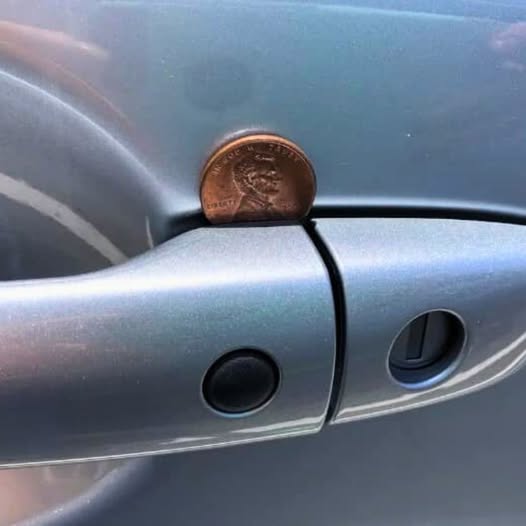
Finding a penny tucked into a car door handle can spark an immediate sense of unease. Most people return to their vehicle expecting nothing to have changed, so even a small, unexpected object feels intrusive. Cars are personal spaces, and when something unfamiliar appears, the mind quickly jumps to questions about intent. Was it accidental, a prank, or something more concerning? That instinctive reaction is normal and rooted in basic personal security.
Online rumors have amplified these worries. One widely shared claim suggests that a coin placed in a door handle can prevent a car from locking properly, allowing someone to access the vehicle later. The story spreads easily because it sounds simple and alarming. Fear-based explanations often travel faster than factual ones, especially when they involve personal safety and property.
In reality, this tactic rarely works, particularly with modern vehicles. Today’s cars rely on electronic locking systems and sensors that a small coin cannot override. A penny won’t stop a latch from engaging or disable central locking. Even with older cars, the scenario is unreliable and highly noticeable. The dramatic explanation usually doesn’t align with how vehicles actually function.
Most often, the cause is completely ordinary. Parking lots are busy, unpredictable spaces. A coin may fall from a pocket, get nudged by a bag or shopping cart, or even be placed by a curious child. Wind, movement, and vibration can send small objects into strange places without intention. Still, awareness matters. If you notice something unusual, check that your doors lock properly and look for obvious signs of tampering. In most cases, a penny in a door handle is just that—a harmless coincidence, not a hidden threat.