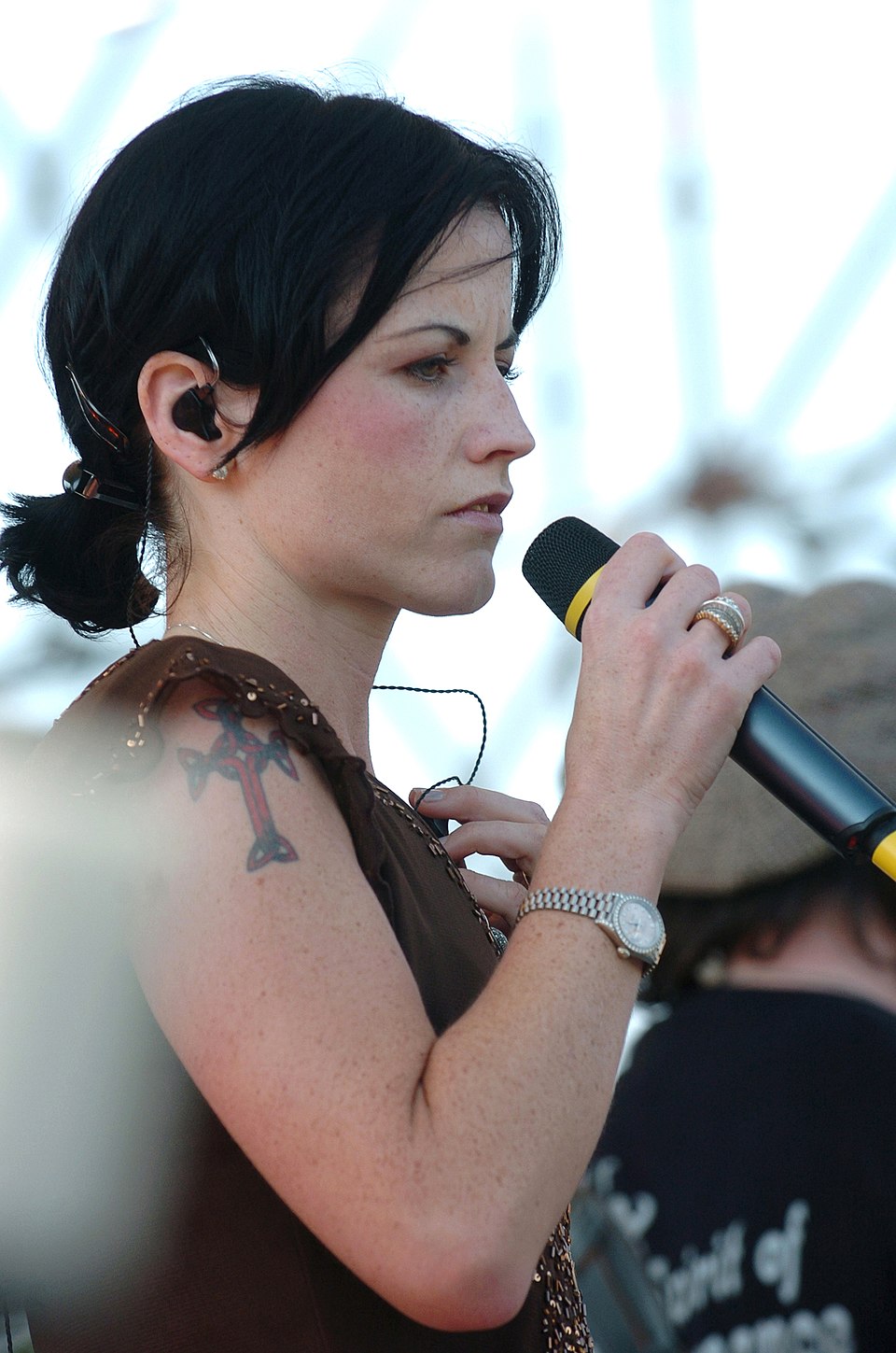
She began singing almost before she could speak, and by the time she was a child, her voice already carried a rare emotional depth. Born on September 6, 1971, in rural County Limerick, Ireland, Dolores O’Riordan grew up as the youngest of nine children in a strict Roman Catholic household. Surrounded by folklore, isolation, and hardship, she found comfort in music, animals, and imagination, shaping a voice that would later define a generation.
Despite financial struggles and a disciplined upbringing centered on church and music lessons, her talent was undeniable. Singing traditional Irish songs and learning instruments at school, she stood out early. At 18, driven by an unshakable desire to perform, she left home and endured poverty before fate intervened. In 1990, she joined a local band that soon became The Cranberries, instantly captivating audiences with her haunting tone and raw honesty.
The band’s rise in the 1990s was meteoric. Albums like Everybody Else Is Doing It, So Why Can’t We? and No Need to Argue produced global hits such as “Linger” and “Zombie,” the latter reflecting her fearless approach to political storytelling. Fame, however, came at a cost. Dolores openly struggled with depression, eating disorders, bipolar disorder, and trauma rooted in childhood abuse, all intensified by relentless touring and public pressure.
Though motherhood and music offered moments of healing, her personal battles never fully eased. After years of instability, Dolores O’Riordan died on January 15, 2018, at age 46, in an accidental drowning linked to alcohol intoxication. Her legacy endures through her unmistakable voice and unfiltered emotion. As one bandmate reflected, “What you saw was what you got.”