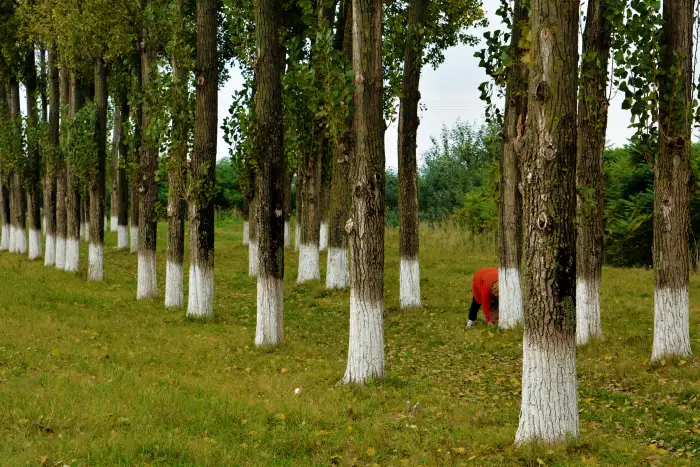
Across the internet and in gardens around the world, tree lovers share a deep commitment to nurturing young trees into healthy, thriving giants. Growing a fruit tree or ornamental tree from a sapling requires patience, knowledge, and a few smart techniques. One practice that often sparks curiosity is the sight of tree trunks painted white. While it may look decorative, this method serves a practical and protective purpose rooted in long-standing horticultural wisdom.
White paint on tree trunks is primarily used to prevent sunscald, a form of damage that commonly occurs during winter months. When cold nights are followed by bright, sunny days, the bark can heat up quickly and then refreeze, causing cracks and splits. These injuries weaken the tree and leave it vulnerable to disease and pests. The light-colored paint reflects sunlight, keeping the bark cooler and reducing temperature stress, especially on young or thin-barked trees.
This technique is widely used in orchards and residential landscapes where fruit trees are more exposed to harsh seasonal changes. Gardeners typically use water-based white latex paint diluted with water to allow the bark to breathe. Some even add joint compound to the mixture, creating a thicker coating that can also deter insects from boring into the trunk. The goal is protection, not decoration.
Applying the paint is best done with a brush rather than a sprayer to ensure even coverage and proper adhesion. Most tree owners repeat the process once a year, treating it like a seasonal safeguard. Far from being a visual trend, painting tree trunks white is a simple yet effective strategy that helps trees withstand environmental stress and grow stronger over time.