What Chicken Color Really Says About Quality
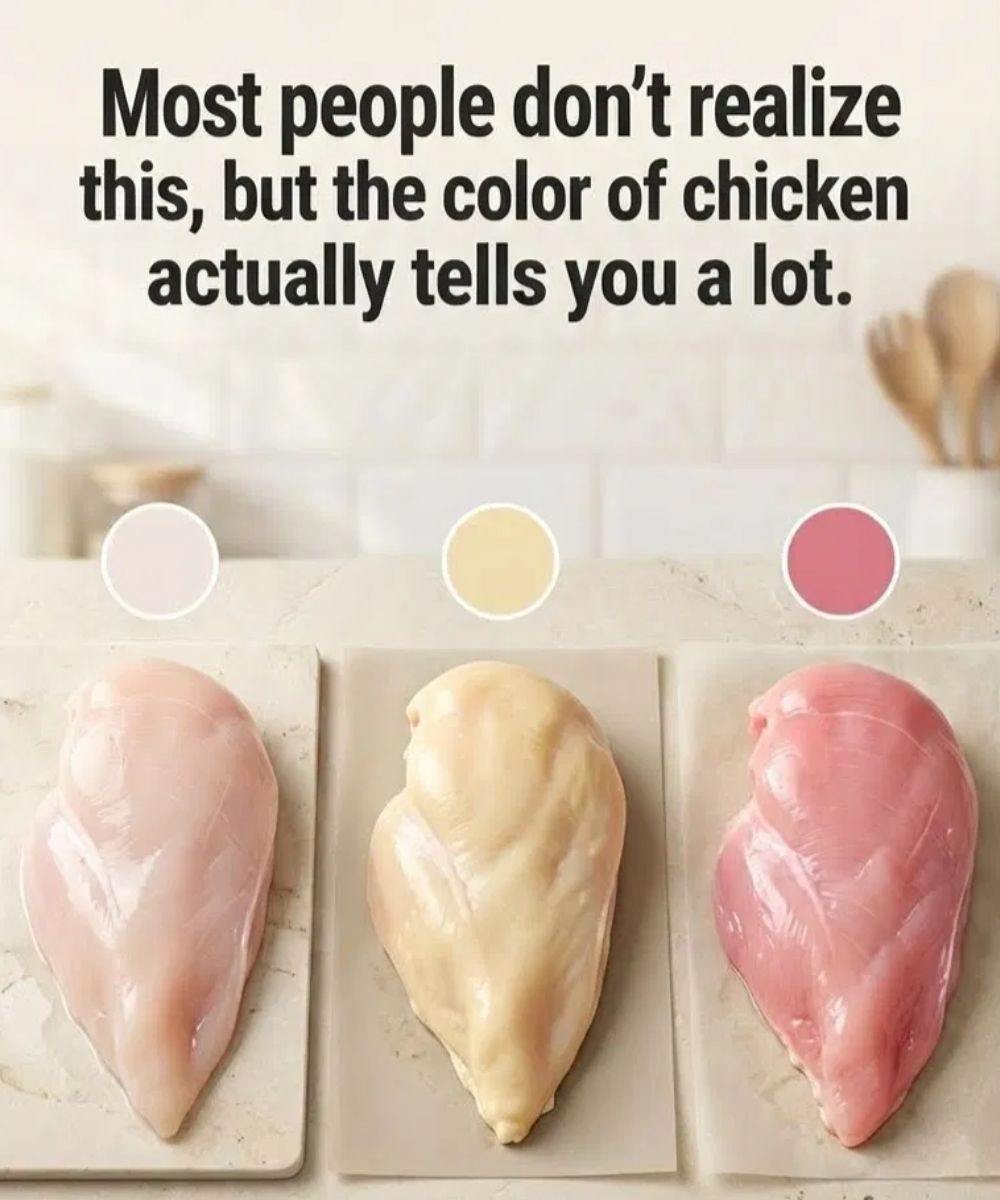
Standing in the meat aisle, you might notice chicken that ranges from pale pink to deep yellow. Same cut, similar price—yet the color difference raises questions. Is one healthier? Is the other more natural? While color feels important, it rarely tells the full story.
Why Some Chicken Looks Pale
Lighter chicken is usually linked to large-scale commercial farming. These birds are bred to grow quickly and are raised indoors on controlled diets. The pale tone doesn’t mean the meat is unsafe or low-quality—it simply reflects a system built for efficiency and affordability rather than natural movement.
The Meaning Behind Yellow Chicken
Golden or yellow chicken often comes from birds fed diets rich in corn or plants containing natural pigments. Chickens that spend time outdoors and grow more slowly tend to develop firmer meat and deeper flavor. As many shoppers say, “It tastes like chicken used to.”
What Actually Matters
Color can be misleading. Some producers enhance feed to create a yellow look without changing farming practices. Instead, check labels like organic, pasture-raised, or certified humane. Fresh smell, firm texture, and good flavor matter far more than appearance.
In the end, chicken color is just the first clue—not the final answer.