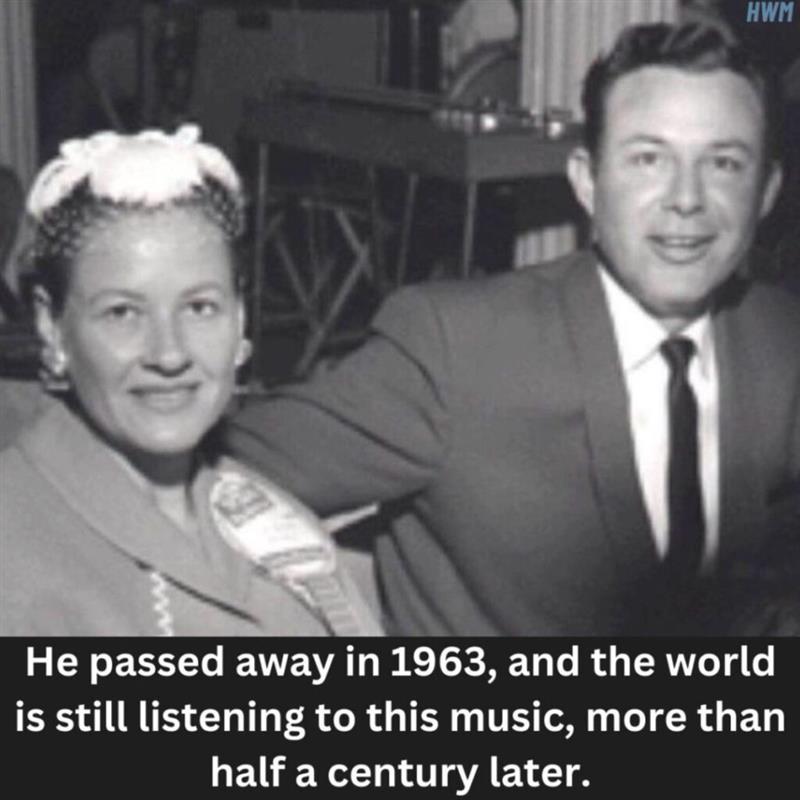
In 1960, Jim Reeves released “He’ll Have to Go,” a song that quietly reshaped both country and popular music. Without flashy production or dramatic lyrics, its emotional restraint and intimacy connected instantly with listeners. At a time when country music was still seen as regional, the song crossed genres, proving the style could be elegant, subtle, and universally relatable without losing its roots.
Reeves’ smooth baritone was central to the song’s impact. Unlike the rougher country vocals of earlier eras, his delivery was calm, controlled, and deeply personal. Produced by Chet Atkins, the minimalist arrangement reflected the emerging Nashville Sound, allowing Reeves’ voice to carry the emotion. The opening line pulled listeners into a private moment of longing, making the song feel more like a confession than a performance.
“He’ll Have to Go” topped the country charts and reached No. 2 on the pop charts, a rare crossover success at the time. Its influence endured through decades of covers, cultural references, and continued airplay. More than sixty years later, the song remains a powerful reminder that sincerity, simplicity, and emotional honesty can change music forever.