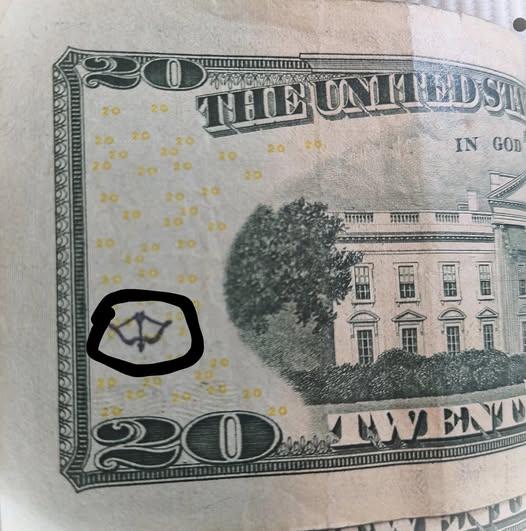
Have you ever noticed strange ink stamps or markings on a U.S. dollar bill that seem out of place? These symbols, known as chop marks, are far from random damage. They are verification stamps added by money changers, traders, and shopkeepers to confirm a bill’s authenticity. Each mark represents trust—a silent agreement between people who may not share a language but still rely on the same currency to exchange value.
Chop marks most often appear on U.S. dollars circulating outside the United States. They are common across parts of Asia, Africa, and Latin America, where the dollar functions as a parallel currency for daily transactions, savings, and trade. In regions where cash remains central to commerce, a small stamp signals that the bill has already been inspected, reducing uncertainty and speeding up transactions.
The practice traces back centuries to China, where merchants used silver coins and stamped them after testing weight and purity. Over time, coins accumulated multiple seals, each one confirming value. When paper money replaced metal currency, the habit continued. Though the medium changed, the purpose remained identical: protection against fraud and reassurance between strangers.
Today, lightly stamped bills are still legal tender and widely accepted, though heavily marked notes may be rejected by banks or machines. Ironically, in local markets, a stamped bill can be seen as safer than a pristine one. For collectors and historians, chop-marked currency is especially valuable. Each bill becomes a visible record of global travel, cooperation, and commerce—proof that money, at its core, is built on human trust.