The quiet, tree-lined streets of Brentwood, Los Angeles, were shattered on a Sunday in December. Inside a home on one of those exclusive streets, a scene of profound tragedy unfolded. Acclaimed filmmaker Rob Reiner, the creative force behind beloved movies like When Harry Met Sally…, and his wife, Michele Singer Reiner, were found dead. The news, first reported as a medical aid call, quickly turned grimmer: the LAPD was investigating a double homicide by stabbing.
The couple’s son, Nick Reiner, was soon arrested in connection with the deaths. In an instant, a family was torn apart, and Hollywood lost one of its most distinct voices—a director, an activist, and a man never afraid to speak his mind.
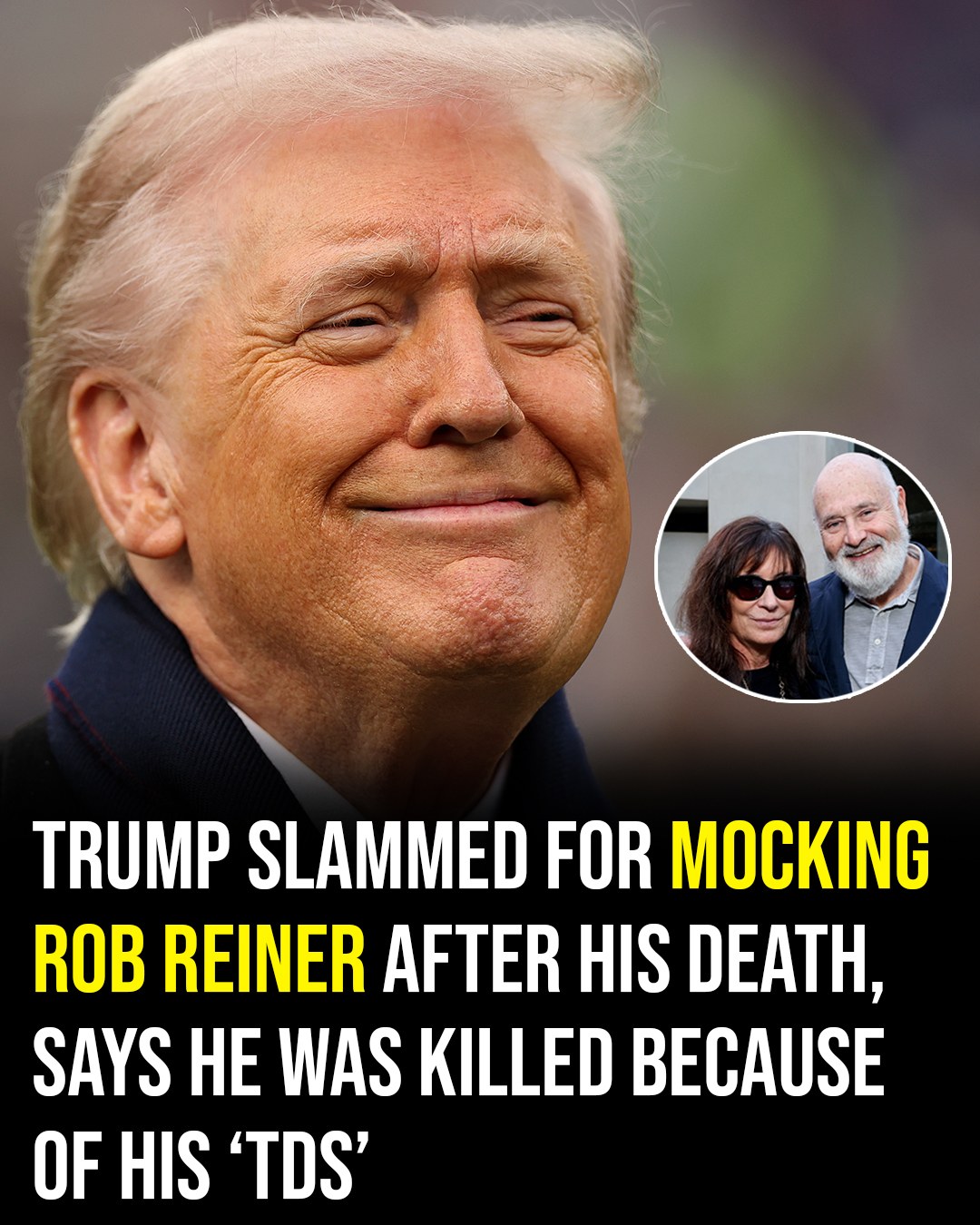
As tributes from colleagues and friends began to pour in, mourning a man known for his sharp wit and sharper social conscience, another voice entered the conversation. From his platform on Truth Social, former President Donald Trump offered a statement that would ignite a national controversy all its own.
It began with a diagnosis, not a condolence. Trump wrote that Reiner had died “due to the anger he caused others through his massive, unyielding, and incurable affliction with a mind‑crippling disease known as TRUMP DERANGEMENT SYNDROME.” He suggested the filmmaker’s relentless criticism had “driven people crazy.” Only at the very end did he add, “May Rob and Michele rest in peace!”
The reaction was swift and spanned the political divide. For many, it was a bridge too far. The comments landed not as political sparring, but as a callous and inflammatory politicization of a raw, violent family tragedy. Critics argued that the moment demanded empathy, not commentary—especially from a former president. Even some traditional political allies expressed unease, urging for restraint and respect for a grieving family.
The backlash highlighted a deep cultural fissure. Rob Reiner was, indeed, one of Trump’s most prominent and persistent critics. His political activism was a core part of his public identity for decades. To some, Trump’s framing was a blunt, if shocking, reflection of their long-standing feud. To others, it was a profound failure of basic decency, leveraging a horrific crime to score political points.
As the LAPD continued its work, focusing on evidence and family dynamics within the home, the public conversation split into parallel tracks. One was a somber reflection on legacy and loss, on a career that shaped American comedy and drama. The other was a heated debate about the soul of political discourse itself—about where the lines are, or if they still exist, when personal tragedy collides with public life.
The story of that December day became more than a crime report. It became a poignant, painful snapshot of an era, where even in death, it seems, no moment is spared from the nation’s unending political battle. The final sentiment, echoed by voices from all sides, was a simple, human one: some moments should be beyond the fray.