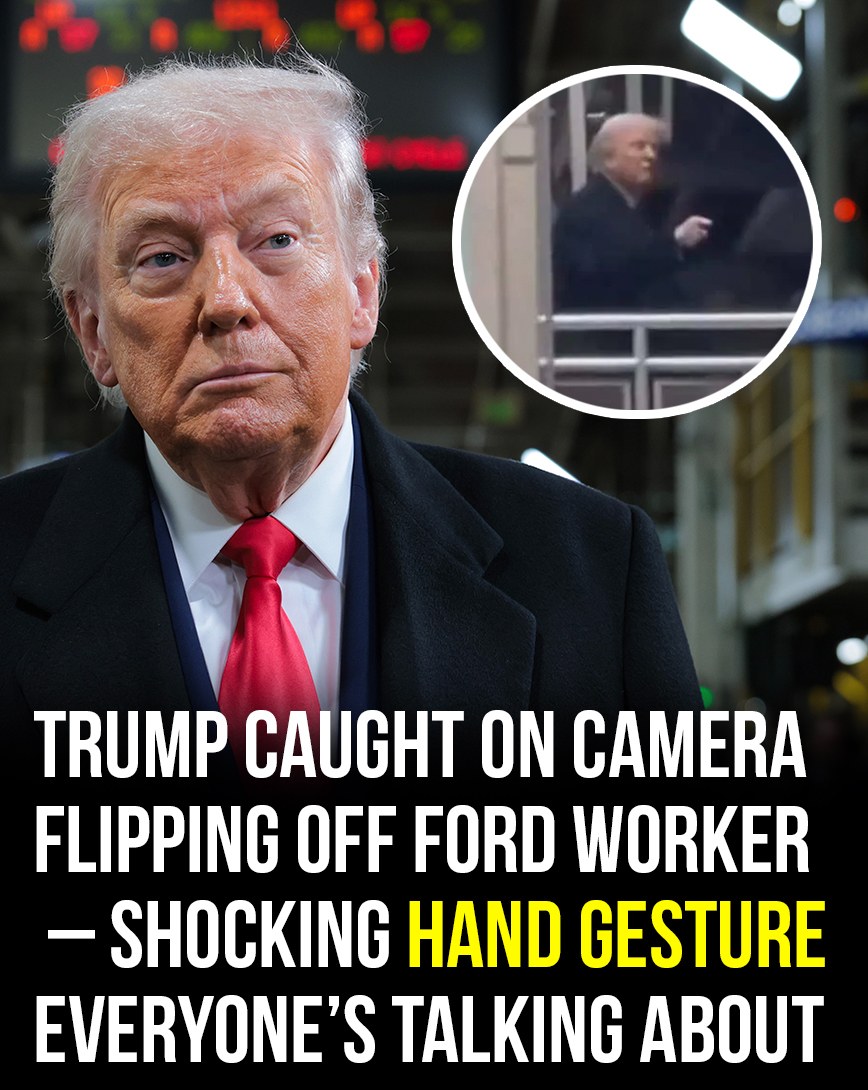
Donald Trump has long been one of the most polarizing figures in American politics, admired by loyal supporters and sharply criticized by opponents. That divide was on full display during his recent visit to Ford’s historic River Rouge manufacturing plant in Dearborn, Michigan, where a confrontation with a heckler quickly overshadowed what was meant to be a routine appearance highlighting American manufacturing and industrial strength.
According to reports and circulating video, a worker shouted an inflammatory remark accusing Trump of protecting a pedophile—an apparent reference to his past association with Jeffrey Epstein. Trump visibly reacted, pointing toward the individual, mouthing profanity, appearing to say “you’re fired,” and making an obscene gesture as he moved away. The moment went viral almost instantly, igniting fierce debate over presidential conduct, provocation, and decorum in public settings.
The White House defended Trump’s response as appropriate, citing extreme provocation, while critics argued it was unbecoming of a public official. The incident also reignited scrutiny of Trump’s Epstein ties and the slow release of related Justice Department files. Supporters saw authenticity and defiance; detractors saw volatility. In a deeply polarized climate, the Dearborn episode became another symbol of how sharply Americans interpret the same moment.