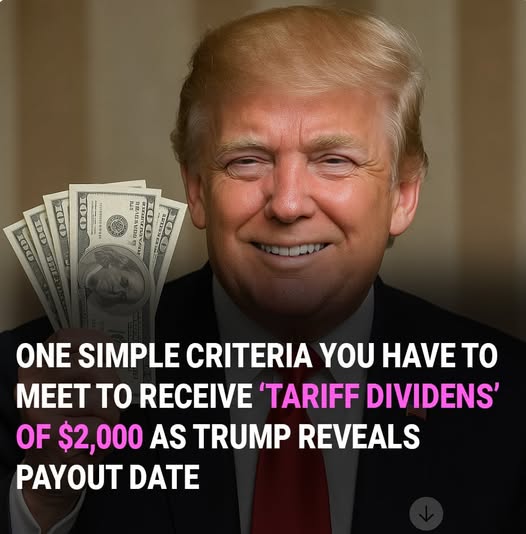
Trump Floats a New “American Dividend” Funded by Tariffs
Former President Donald Trump has unveiled a new economic idea on Truth Social — a nationwide “American Dividend” that would send at least $2,000 per person to eligible U.S. residents. According to Trump, the payments would be funded entirely through tariff revenue generated from foreign imports.
How the Proposal Would Operate
Trump’s plan centers on raising tariffs on imported goods and redistributing a portion of that revenue directly to American households. He argues that foreign exporters should “pay their fair share,” and that the money collected should flow back to U.S. citizens rather than overseas companies.
In defending the approach, Trump called tariff critics “fools,” claiming strong markets and low inflation during his presidency as proof that such policies work. Still, no official blueprint has been provided. Key questions — including how payments would be delivered, who qualifies, and whether rebates, tax credits, or other mechanisms would be used — remain unanswered.
What Experts Are Watching
Economists note that while tariff-funded dividends are rare, the concept resembles Alaska’s Permanent Fund, which redistributes oil revenue to residents. Critics warn that broad tariffs may increase consumer costs or spark trade tensions. Supporters argue they could boost American manufacturing and reduce reliance on foreign supply chains.
A Vision Waiting for Details
At this stage, the “tariff dividend” is more political messaging than finalized policy. If implemented, it would be one of the largest attempts in U.S. history to convert tariff revenue into direct household income.
In short, Trump’s proposal underscores a core theme of his economic strategy: leveraging national revenue tools to put money directly into Americans’ pockets. Whether it can work — and how — depends on future policy design and congressional approval.