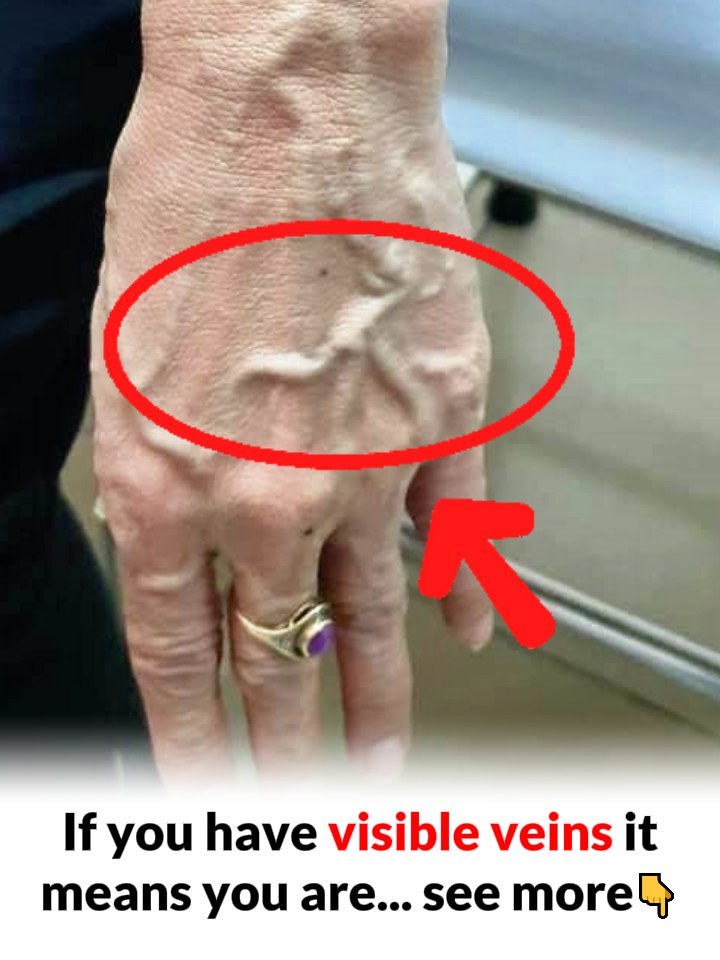
Suddenly noticing visible veins on your hands, arms, legs, or chest can be surprising, especially if they seem to appear out of nowhere. For many people, these veins are completely harmless and linked to everyday factors like aging, genetics, or natural changes in the body. Skin becomes thinner over time, muscles shift, and circulation adapts — all of which can make veins more prominent. In other cases, temporary conditions such as heat, stress, or recent physical activity can cause veins to stand out more than usual. While these changes are often normal, it’s helpful to understand why they occur and when they might indicate something more serious.
Several common reasons can make veins suddenly more visible. Lower body fat can remove the layer of cushioning that normally hides veins, bringing them closer to the surface. Intense exercise or weight lifting increases blood flow and muscle pressure, causing veins to swell temporarily. Hot weather widens blood vessels, while hormonal changes during pregnancy or menopause can influence circulation. As skin loses elasticity with age, veins naturally appear more pronounced. These factors alone are typically harmless and part of natural bodily changes, but they can still raise questions for anyone noticing them for the first time.
However, visible veins can sometimes signal an underlying problem. If bulging or twisted veins appear without any clear reason — no weight loss, no workout changes, no heat exposure — it’s worth paying attention. Pain, swelling, tenderness, or warmth around a vein may indicate inflammation or even a clot, which requires immediate medical care. Hard or rope-like veins, skin discoloration, persistent itching, or ulcers around the area may suggest venous insufficiency or other circulatory conditions. Sudden, unusual veins in the chest or abdomen are rare but can reflect serious internal issues.
Because of this, knowing when to seek medical advice is important. You should consult a healthcare provider if veins appear suddenly without explanation, become painful, feel warm, or accompany symptoms like swelling, fatigue, or leg cramps. Even if the concern is cosmetic, speaking with a professional can provide reassurance and guidance. In most cases, visible veins are not dangerous — but staying aware of changes helps protect your long-term health.